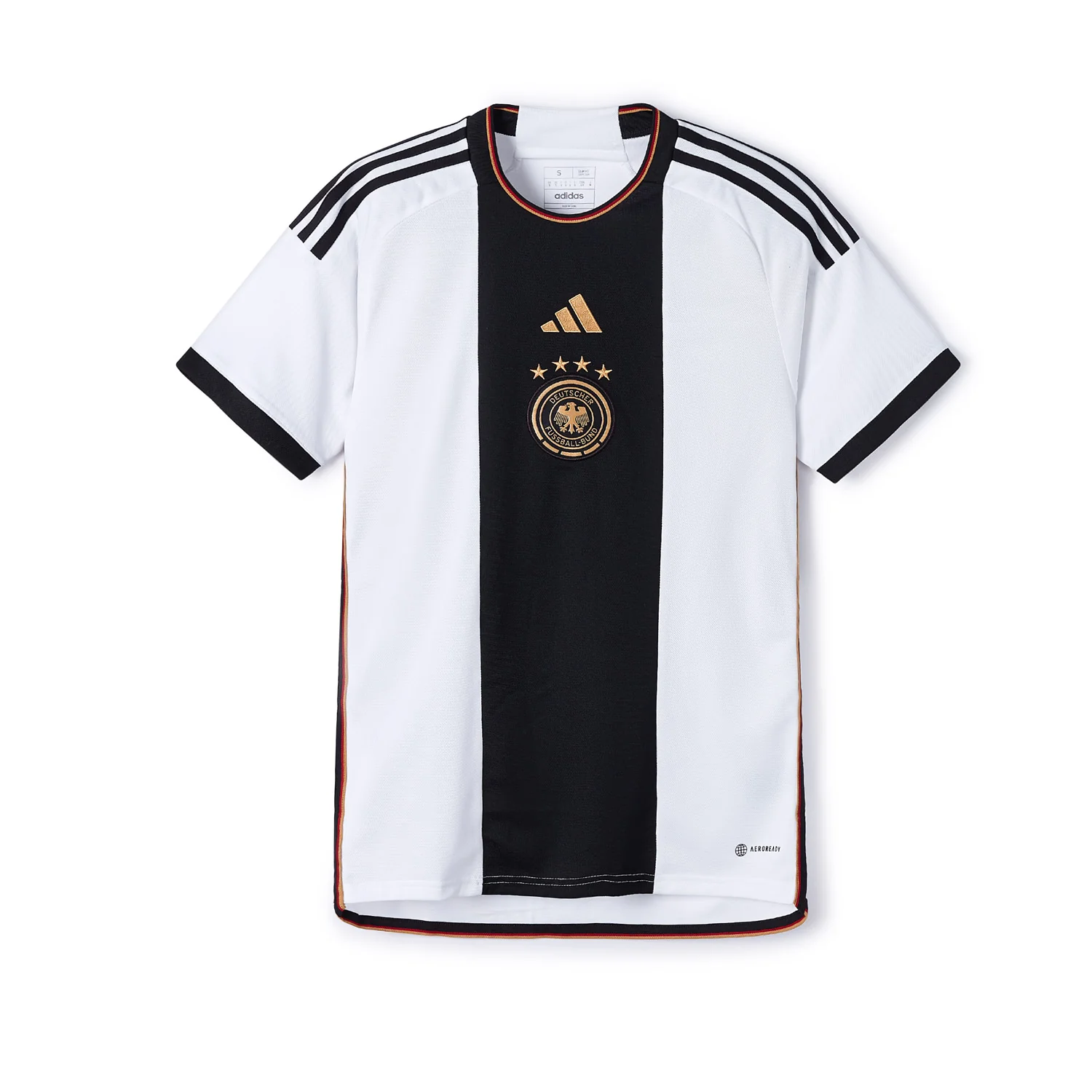
Fabrics
Sportswear Fabric Guide: The Main Fabrics and What They Are For
Polyester interlock, mesh, pique, nylon-elastane, fleece, French terry, tricot and stretch wovens — what each fabric is, how it behaves and which products it suits.
Fabric decides how a garment feels, how it performs, how it can be decorated and how much it costs. Yet most buyers choose it last, after the design is finished. This guide covers the fabrics you will meet most often in sportswear, in the order you are likely to need them.
For technical data on each — composition, GSM, stretch and care — see our materials library.
Knits and wovens: the first split
Almost all sportswear fabric is either knitted or woven.
- Knits are made from loops of yarn, like a jumper. They stretch naturally and feel soft, which is why T-shirts, jerseys, hoodies and leggings are knits.
- Wovens are made from threads crossing at right angles. They are stronger, more wind-resistant and hold a crisp shape — think shorts, track pants and rain jackets.
Adding elastane (spandex) to either gives stretch where the base fabric has little.
Polyester interlock
The standard fabric for sublimated match shirts. Two layers of knit locked together give a smooth surface on both sides, which prints sharply. Typical weights are 120–160 GSM. It wicks sweat, dries quickly and keeps its colour.
Use it for: football, volleyball, handball and hockey shirts, training tops.
Mesh (micro-mesh and bird's-eye)
Knits with small holes for airflow. Micro-mesh is the most open and the lightest; bird's-eye has a tighter diamond pattern and is more durable.
Use it for: basketball vests, ventilation panels, hot-weather kit, training shirts.
Pique
A textured knit with a waffle-like surface. In polyester it is a performance fabric for team polos and cricket shirts; in cotton it is the classic lifestyle polo.
Use it for: polos, cricket playing shirts, coaching wear.
Heavyweight rugby knit
A dense interlock, usually 220–260 GSM, that resists grabbing and abrasion. It still sublimates well.
Use it for: rugby and American football jerseys, contact-sport training wear.
Nylon–elastane compression knit
Warp-knitted nylon with around 20% elastane. Strong recovery, smooth against skin and opaque enough for leggings when the weight is right (usually 200–260 GSM). Nylon does not sublimate like polyester, so these are usually solid-dyed.
Use it for: compression tops and shorts, leggings, sports bras.
Polyester–elastane jersey
A softer, stretchier alternative to interlock with around 8–12% elastane. Good for fitted cuts and women's ranges.
Use it for: fitted performance tees, cycling jerseys, base layers (with a brushed back).
Fleece and French terry
Both are cotton-rich knits with loops on the inside. In fleece, the loops are brushed into a soft pile that traps heat; in French terry, the loops are left intact, making it lighter and more breathable.
Use them for: hoodies, sweatshirts, joggers and sweat shorts.
Tricot
A warp knit with a smooth, often brushed ("peach") face. It drapes well, resists pilling and is the classic tracksuit fabric.
Use it for: tracksuits, track jackets, warm-up tops.
Stretch wovens
Fine polyester or nylon weaves with elastane. Tough, light and flexible, with a cleaner look than knits.
Use them for: training and running shorts, tapered training pants, golf and tennis shorts.
Ripstop and shell fabrics
Light wovens with a reinforcing grid to stop tears spreading, usually with a water-repellent finish.
Use them for: rain jackets, windbreakers, coaches' jackets.
Quick reference
| Product | Typical fabric | Typical weight |
|---|---|---|
| Football shirt | Polyester interlock or bird's-eye | 130–160 GSM |
| Basketball vest | Micro-mesh | 120–140 GSM |
| Rugby jersey | Rugby knit | 220–260 GSM |
| Team polo | Polyester pique | 160–200 GSM |
| Leggings | Nylon–elastane | 220–260 GSM |
| Tracksuit | Micro-peach tricot | 200–260 GSM |
| Hoodie | Brushed fleece | 280–400 GSM |
| Training shorts | Stretch woven | 130–180 GSM |
The weights above are common starting points, not rules. For what the numbers actually mean, read What does GSM mean?.